Decibel guide how loud is a portable AC in a quiet bedroom
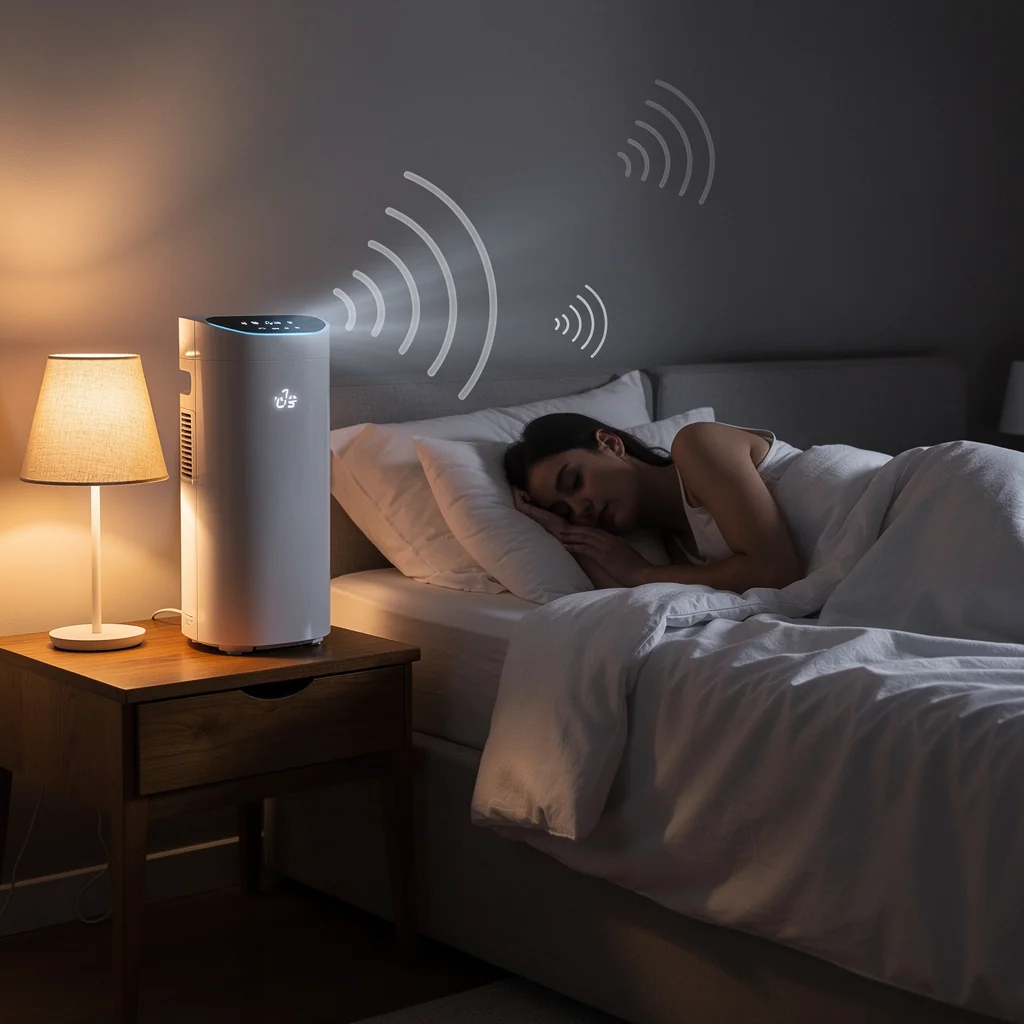
Most portable air conditioners run at roughly 55–65 dB on their highest setting. That is far above the 30 dB the World Health Organization recommends for a bedroom at night. Choose a model with a quiet or sleep mode, check the noise rating at low fan speed, and cool the room before bedtime.
Understanding Decibel Levels in a Bedroom
A portable air conditioner typically operates between 55 dB and 65 dB when set to its highest cooling mode. For context, a normal conversation is around 60 dB, while a quiet bedroom at night is usually 30–35 dB. This means a running unit can be 20–30 dB louder than the ambient sleep environment, which may be noticeable to light sleepers.
What the Numbers Mean
- 50 dB – Soft rain, gentle office hum.
- 55 dB – Moderate traffic, typical portable AC low‑fan setting.
- 60 dB – Normal conversation, portable AC on high cooling.
- 70 dB – Busy street, vacuum cleaner – generally too loud for uninterrupted sleep.
Because decibels are measured on a logarithmic scale, a 10 dB increase feels roughly twice as loud to the human ear. So a unit moving from 55 dB to 65 dB can feel significantly more intrusive.
Choosing a Sleep‑Friendly Model
- Check the spec sheet – Look for “noise level (dB) at low fan speed.”
- Prefer units with a “quiet mode.” Many newer models cap noise at 48–52 dB on the lowest setting.
- Consider placement – Position the AC near a wall or corner to dampen sound reflections.
- Add soft furnishings – Heavy curtains, rugs, and a plush headboard absorb excess noise.
See our recommended portable air conditioners
Practical Tips for a Quieter Night
- Run the AC for 10‑15 minutes before bedtime to bring the room to temperature, then switch to a lower fan speed or a fan‑only mode.
- Use a white‑noise machine set slightly louder than the AC; it masks the compressor’s hum without increasing overall volume.
- Seal gaps around the unit with weather‑stripping to prevent draughts that can make the compressor work harder and get louder.
By matching the right unit to your bedroom’s acoustic profile and using these simple strategies, you can keep the air cool without sacrificing a peaceful night’s sleep.
Related guide: a fan is usually the quieter choice. See Fan vs portable air conditioner: which is better for a hot UK bedroom?
Sources
- World Health Organization (Europe) – Noise fact sheet – recommends less than 30 dB(A) in bedrooms at night for good‑quality sleep
- WHO – Night noise guidelines for Europe – background on night‑time noise and sleep
- Energy Saving Trust – How to keep your home cool in hot weather – sizing a portable air conditioner and keeping internal doors closed while it runs
Last reviewed: 15 October 2026