What size portable air conditioner do I need? UK room-size guide
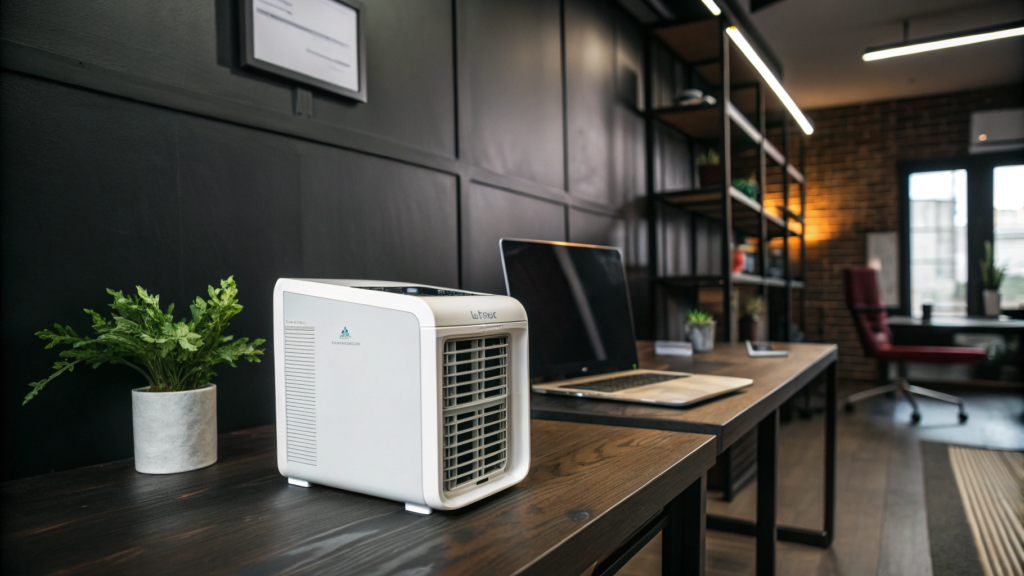
As a starting point, most UK bedrooms suit a portable air conditioner of around 7,000–9,000 BTU. Compact rooms under 12m² may manage with 5,000–7,000 BTU, while rooms of 20–30m² usually need 9,000–12,000 BTU. Then adjust for sun, glazing and heat sources, and check the manufacturer’s stated room coverage.
What size portable AC do you actually need?
Buying the biggest unit you can find is not automatically the best choice. A larger machine costs more to buy, takes up more floor space and draws more power. A unit that suits the room will usually do a better job for less money.
BTU is the main figure used to describe an air conditioner’s cooling capacity. A higher number means the unit is designed to remove more heat. Room size is a useful starting point for choosing a BTU rating, but it is not a complete engineering calculation, and the right answer also depends on how the room behaves on a hot day.
Simple UK room-size starting point
| Room size | Portable AC starting point |
|---|---|
| Under 12m² | Around 5,000–7,000 BTU |
| 12–20m² | Around 7,000–9,000 BTU |
| 20–30m² | Around 9,000–12,000 BTU |
| 30m²+ | 12,000 BTU+ or consider a permanent system |
These are practical starting points, not exact engineering sizing calculations. Always check the manufacturer’s recommended room coverage for the exact model.
Why two rooms of the same size can need different cooling
The same floor area can behave very differently from one home to the next. These are the things that most often push a room towards the upper end of a size band:
- south- or west-facing windows;
- strong afternoon sun;
- poor shading;
- loft or roof exposure;
- large amounts of glazing;
- several occupants;
- gaming PCs or other heat-producing equipment;
- poor night-time ventilation.
A shaded downstairs room may need noticeably less cooling than a loft bedroom of the same floor area, because the loft is taking in heat from the roof and the sun all day.
Small bedrooms and home offices
For compact rooms, a unit rated at approximately 5,000–7,000 BTU may be enough. The advantages are practical ones:
- a smaller appliance that is easier to move;
- lower upfront cost;
- easier storage when the summer is over;
- a sensible fit for a single bedroom or home office.
If the room gets a lot of sun, or the equipment in it gives off a lot of heat, consider the next size up.
See portable ACs for small rooms →
Average UK bedrooms
For many ordinary bedrooms, approximately 7,000–9,000 BTU is a common starting range. Rooms with stronger solar gain, such as a west-facing bedroom that bakes through the afternoon, may justify considering the upper end of that range.
Compare recommended 9,000 BTU portable ACs →
Larger bedrooms and living spaces
For larger spaces, 9,000–12,000 BTU becomes more relevant. Be cautious with open-plan rooms. The unit is effectively trying to cool a larger connected volume, including kitchens and hallways that may be generating their own heat, so they can be much harder to cool than their floor area suggests.
If a very large space overheats repeatedly, a permanent cooling system may eventually be worth considering. For most renters and many homeowners, a correctly sized portable unit is the simpler first step.
Don’t forget the exhaust hose
A portable air conditioner has to push the heat it removes outside, so the hose matters as much as the BTU rating. Plan for it before you buy:
- Sash windows: the opening is usually tall and narrow, so you need a kit or panel that fits it.
- Casement windows: these can work well with a window-sealing kit, but check the hose will reach and the window will close around it.
- Sealing: large open gaps around the hose let warm air back into the room.
- Hose position: keep it short and avoid sharp bends.
For a step-by-step walkthrough, see How to vent a portable AC through a UK sash window →
Should you deliberately buy a larger unit?
Moving up one size category can make sense for loft conversions, rooms with large glazing, rooms with strong afternoon sun, and rooms with poor ventilation.
BTU should not be your only criterion, though. A larger unit tends to use more electricity, so it is worth reading our portable AC running-cost guide as well. Also compare:
- noise;
- electrical consumption;
- dimensions;
- the window kit supplied;
- heating mode, where you would find it useful.
Bottom line
Start with room size, then adjust for the conditions of the room.
Buying an oversized model wastes money, while buying a model that is clearly too small may result in disappointing cooling. Use the table above as a starting point, adjust for sun and heat sources, and then check the manufacturer’s own room-coverage figure for the model you are considering.
Find the right portable AC for your room
See recommended portable air conditioners →
Sources
- Energy Saving Trust – How to keep your home cool in hot weather – advises getting the right size of unit for the room and checking for gaps where the exhaust pipe goes out of the window
- Manufacturer specifications for the exact model – recommended room coverage and BTU rating vary between products and manufacturers
Last reviewed: 15 October 2026